
Standing Up for Science in a Time of Attack

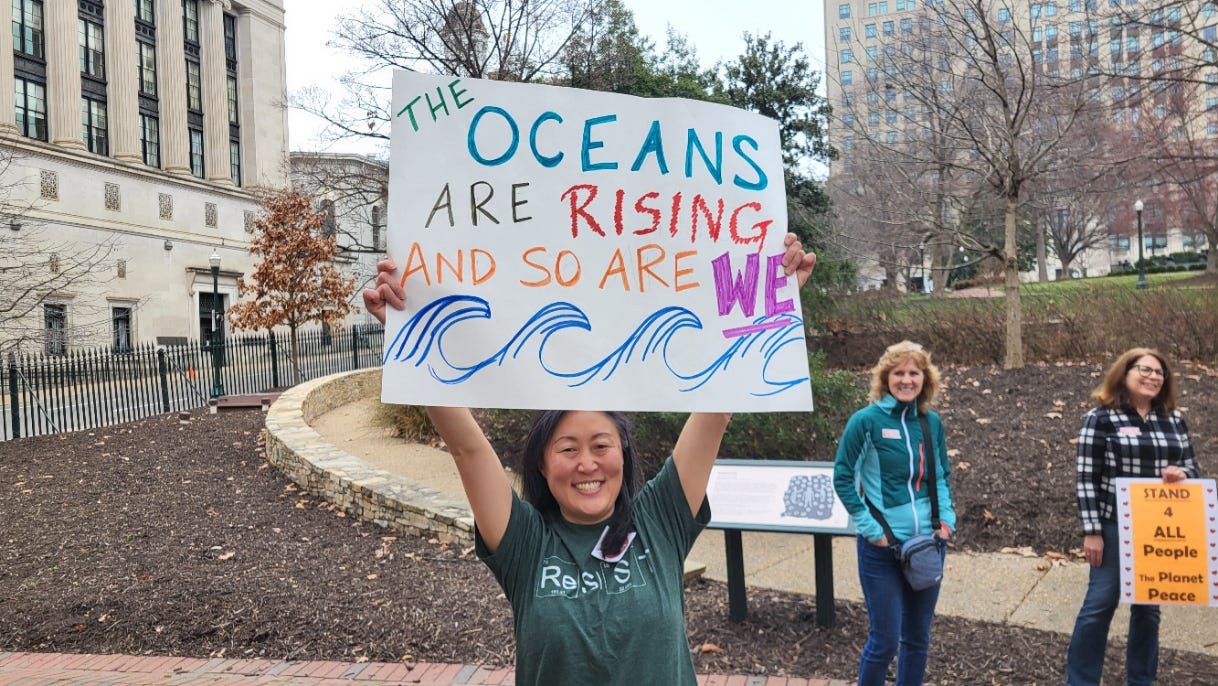
This past Saturday afternoon at Capitol Square in Richmond, I had the privilege of welcoming a crowd gathered for the Stand Up for Science Rally: Take Back Science. People came from across the region—scientists, students, educators, families, and concerned citizens—to speak up for something that should never be controversial: the value of science in a functioning democracy.
The event was one of 50 in cities across the U.S. that gathered for the second year (up from 12 last year) to underscore the threats that face science. Since the new Trump administration took office in 2025, U.S. science agencies have lost more employees than over the previous two decades. A further 10,000 or so Ph.D.-level experts in technical fields employed by the U.S. federal government have been lost to retirements, illegal firings, or buyouts, Science reported.
“The administration has gutted the scientific integrity infrastructure of the government,” said Gretchen Goldman, president and CEO of the Union of Concerned Scientists and a speaker at this year’s flagship rally in Washington, D.C. “There’s firing of scientists, dismantling of federal programs, disregard of congressional mandates on science, and an affront on the role that science should play in government decisions.”
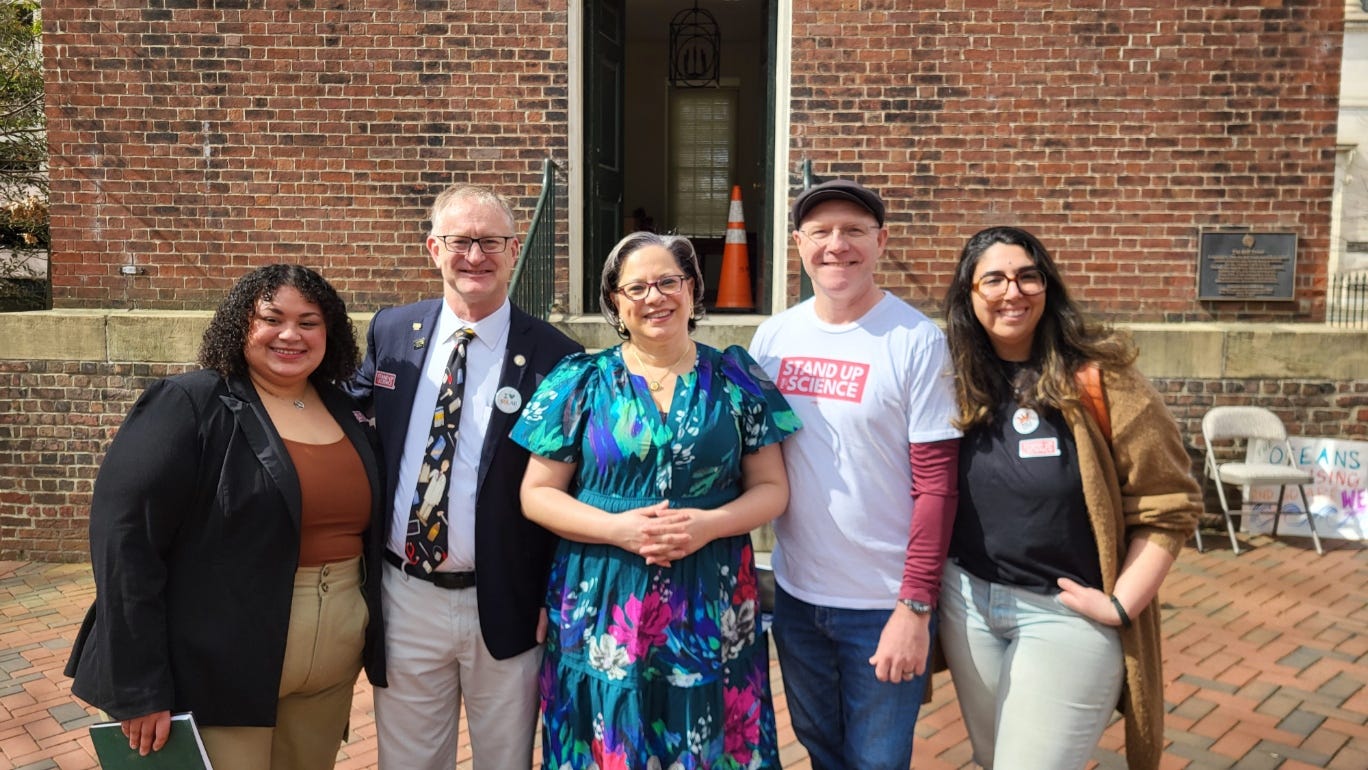
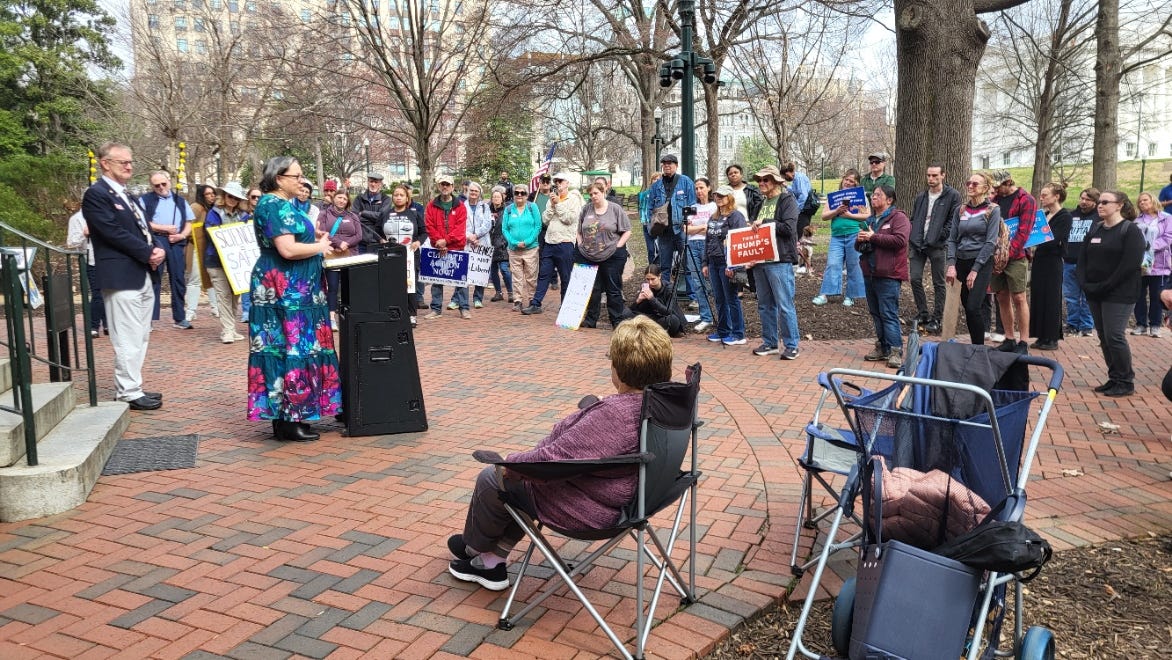
In Richmond, the rally featured speakers spanning health sciences, environmental science, and public policy. I’m deeply grateful to each of them for donating their time and their voices. This was a peaceful gathering, although it is natural to feel anger at the erosion of institutions that serve the public good; we must not allow ourselves to be baited into the kind of spectacle that those attacking science would welcome. The goal is not chaos. The goal is clarity.
Why We Stand Up for Science
Science is under unprecedented attack in our lifetimes. Since the end of World War II, leaders across the political spectrum largely understood something fundamental: public investment in science fuels innovation, strengthens national security, improves public health, and drives economic prosperity. From space exploration to medical breakthroughs to weather forecasting, the benefits of those investments have shaped modern American life.
But that long-standing bipartisan understanding is fraying. Thirty years ago, the late astronomer and science communicator Carl Sagan warned about exactly this kind of moment in his book The Demon-Haunted World. He imagined a future where technological power would grow while public understanding of science declined—where superstition and misinformation could crowd out evidence and reason. His warning feels less like speculation today and more like a diagnosis.
In the past year alone, we’ve seen well-earned research grants abruptly terminated, career scientists dismissed without cause, and federal science institutions weakened or dismantled. Some of the world’s leading national laboratories—institutions built over generations—now face the threat of closure or privatization. For those of us working in atmospheric science, the damage hits especially close to home.
The Work That Protects Us
Since the 1960s, the National Center for Atmospheric Research (NCAR) in Colorado has produced groundbreaking research that quietly improves our daily lives. Scientists there helped develop technologies that detect turbulence and wind shear—innovations that make flying dramatically safer. They developed the foundation of the atmospheric models that go into nearly every weather app on our phones.
Much of the public never sees this work. That’s part of the problem. When science works well, it fades into the background of everyday life. But that invisibility can make it easier for people to underestimate its importance. Right now, some leaders are counting on Americans to forget. We cannot.
Those of us who have lived in Virginia long enough remember what happens when science is ignored. We remember the Kepone disaster in the 1970s that poisoned the James River. We remember the alarming discovery of the ozone hole in the 1980s. We remember the heavy summer haze that once hung over cities like Richmond well into the 1990s. Those problems did not disappear on their own. Scientists gathered evidence, identified the causes, and public officials—both Republicans and Democrats alike—listened to the experts and acted.
Today, the James River is healthier. The ozone layer is slowly healing. Air pollution in many American cities has declined dramatically. Those victories were not accidents. They were not miracles. They were the result of science.
The Next Challenge
Now we face the defining environmental challenge of our era: climate change. The physics of climate does not care about politics. It does not change based on ideology. And no amount of misinformation will alter the evidence scientists have painstakingly gathered over decades. Some will attempt to obscure the science. Others will try to bury it. But evidence has a stubborn way of resurfacing. And scientists—along with the public who depend on their work—will not be deterred.
Every discovery, every innovation, every breakthrough starts with someone learning how to ask questions about the world and how to test the answers. That commitment to knowledge and education is what brought people together in Richmond and all across the country. It’s what will ultimately determine whether the U.S. remains a global leader in science or retreats into ignorance.
Defending science isn’t just about research funding or laboratories. It’s about defending the very idea that truth matters.
 | A guest post by
|