


At this week’s House Science, Space, and Technology Subcommittee hearing on NOAA’s FY2027 budget, the central question should have been simple: How does America maintain world-class weather, ocean, climate, fisheries, and coastal services while cutting NOAA by $1.6 billion and eliminating much of the research that makes those services possible?
NOAA Administrator Neil Jacobs defended the President’s budget request as an effort to streamline the agency and move research closer to operations. But the math does not work. The budget would reduce NOAA’s funding by roughly $1.6 billion from last year’s level and, for the second year in a row, propose eliminating the Office of Oceanic and Atmospheric Research, the part of NOAA that houses a network of labs, cooperative institutes, and research programs that help improve future forecasts and services.
Less funding means less capacity and further job losses. That means even fewer people, fewer tools, less certainty, and weaker mission performance. Those losses do not stay inside NOAA either. They have a ripple effect, showing up in less accurate local ocean and weather forecasts, weaker fisheries management, less warning time for dangerous events, and higher costs for communities and businesses that depend on reliable environmental intelligence. Insurance, shipping, agriculture, seafood, emergency management, coastal planning, and public safety all rely on the science NOAA produces. The most dangerous part of the proposal is not simply the size of the cut to NOAA programs. It is the attempt to break apart NOAA Research while suggesting that the work can be safely absorbed elsewhere.
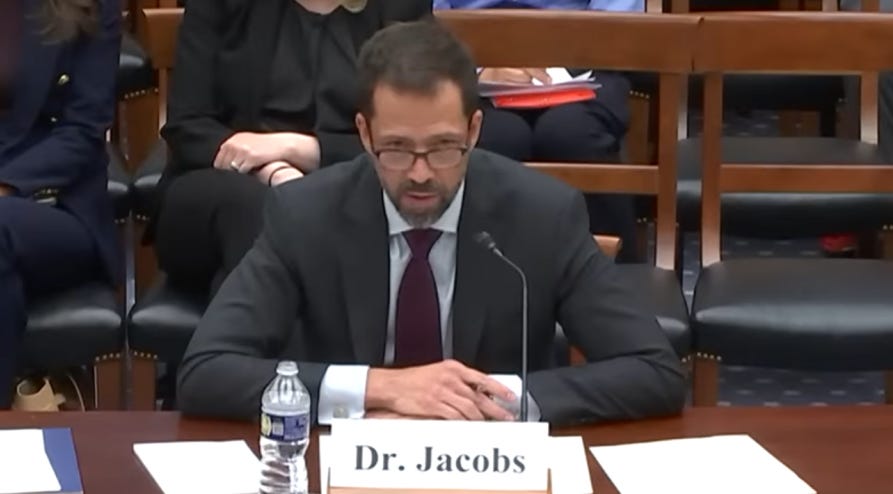
At the hearing, Jacobs argued that some research programs would be cut. He said other functions could move into the National Weather Service and the National Ocean Service, and that the administration was not abandoning key areas of work. But he also acknowledged that grants throughout the agency supporting university-based research would largely be cut. That matters because NOAA’s research enterprise does not exist in isolation. It is deeply connected to universities, cooperative institutes, and scientists who work side by side with federal researchers in NOAA labs. Cutting those partnerships is not an administrative adjustment. It is a loss of scientific capacity much more broadly.
Jacobs’ argument rests on a disproven mantra: relocate the research function into the operations function. It sounds efficient, practical, and like the kind of thing government should do. But that phrase has a history, and it does not support this proposal. In 2000, the National Academies published a report on moving weather and climate research into operational use, often referred to by its subtitle, “Crossing the Valley of Death.” Jacobs incorrectly cited this report. The National Academies did not recommend dismantling the research enterprise or burying research inside operational offices. It emphasized the separate but interdependent roles of research and of operations. It emphasized planning, adequate resources, clear responsibility, and continuous feedback between research and operations. It warned that weak transition planning and inadequate resources can prevent strong science from becoming a useful public benefit. That is the opposite of what this budget proposes.
A real research-to-operations strategy would strengthen the bridge between discovery and service. It would fund transition plans. It would support scientists, modelers, data systems, cooperative institutes, and operational users. It would recognize that today’s reliable forecast began years earlier as research. Instead, this proposal appears to use “transition” as a cover for elimination.
NOAA has faced this question before. In 2004, a distinguished review team chaired by Berrien Moore examined the organization and management of research in NOAA. The conclusion, then, was not to scatter NOAA Research across operating units. The conclusion was to recognize research as a core NOAA function that must be managed, protected, and connected to all of the agency’s missions. There is a reason for that.
Operational offices are built to deliver today’s services. They issue forecasts, manage fisheries, support navigation, protect coastal communities, and respond to emergencies. Their work is urgent and essential. But when budgets get tight, research housed inside operational lines becomes vulnerable. It can become the bill-payer for immediate needs, allowing the future to be sacrificed to cover the present. That may look efficient in a spreadsheet. In practice, it is how national capability erodes.
NOAA’s mission is not only to warn people about the storm already forming. It is to understand the atmosphere, ocean, coasts, climate, fisheries, and ecosystems well enough to improve the next warning, the next model, the next stock assessment, the next harmful algal bloom forecast, the next drought outlook, and the next flood prediction. Research is not separate from that mission. Research is how NOAA keeps its mission from going stale.
Congressional concern at the hearing was bipartisan for a reason. House Science Committee Chair Brian Babin, a Texas Republican, raised concerns about eliminating grants that support streamflow, rainfall prediction, hydrologic modeling, and flash flood warnings. Ranking Member Zoe Lofgren warned that cutting programs that improve hurricane and tornado forecasting is “pennywise and pound-foolish.” They are right to be concerned.
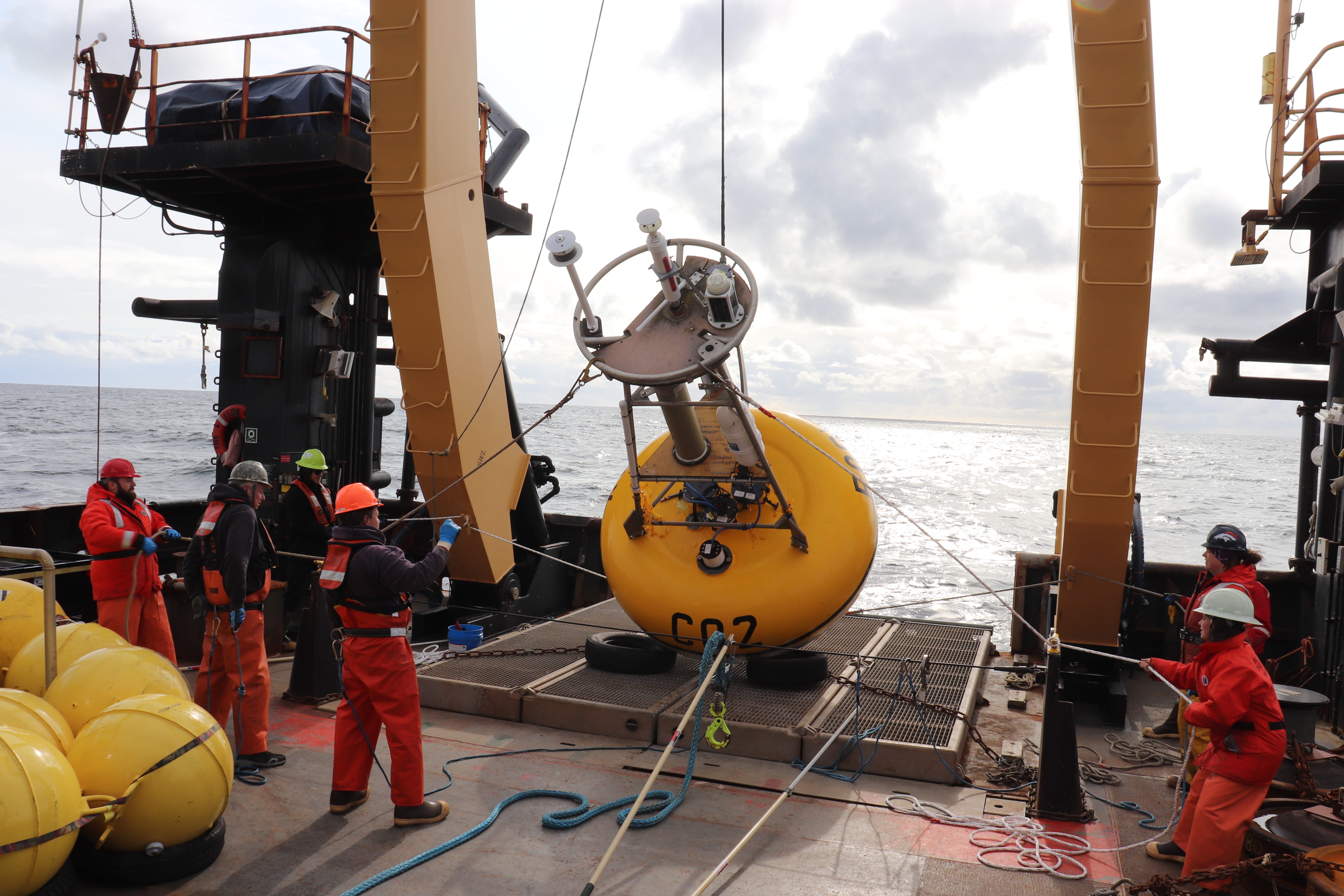
America does not need a NOAA that is smaller on paper and weaker in reality. It does not need a NOAA that preserves the appearance of daily operations while cutting away the research that makes those operations better. It does not need a budget that treats science as overhead when science is the infrastructure beneath forecasts, warnings, fisheries, coastal resilience, and economic decision-making. The FY2027 budget request damages NOAA because it misunderstands what NOAA is.
NOAA is not just a weather service. It is not just a fisheries agency. It is not just a coastal agency. It is an integrated science and service agency. Its strength comes from the connection between observation, research, modeling, operations, and public use. When one part of that system is cut deeply enough, the whole system suffers.
That is the message members of Congress need to hear now. They should not let “streamlining” become a euphemism for dismantling. They should not let “research to operations” become an excuse to eliminate research. And they should not weaken the very science that protects lives, supports industries, and helps communities prepare for what is coming.
NOAA’s administrator got it wrong at the hearing. Congress still has time to get it right.
About the Author
Craig McLean served at NOAA for more than 40 years, rising to the rank of Captain in NOAA’s Commissioned Corps and serving as a member of the Senior Executive Service. At his retirement in 2022, he was NOAA Assistant Administrator for Research, Acting NOAA Chief Scientist, and U.S. head of delegation to the UN’s Intergovernmental Oceanographic Commission. He helped advance global ocean mapping and observation efforts and played a key role in creating the UN Decade of Ocean Science for Sustainable Development. President Biden recognized him for his leadership, service, and commitment to scientific integrity. McLean now serves as senior advisor to the president of the Woods Hole Oceanographic Institution and advises several ocean-focused organizations. Read more.
