
More or Less
What science needs now

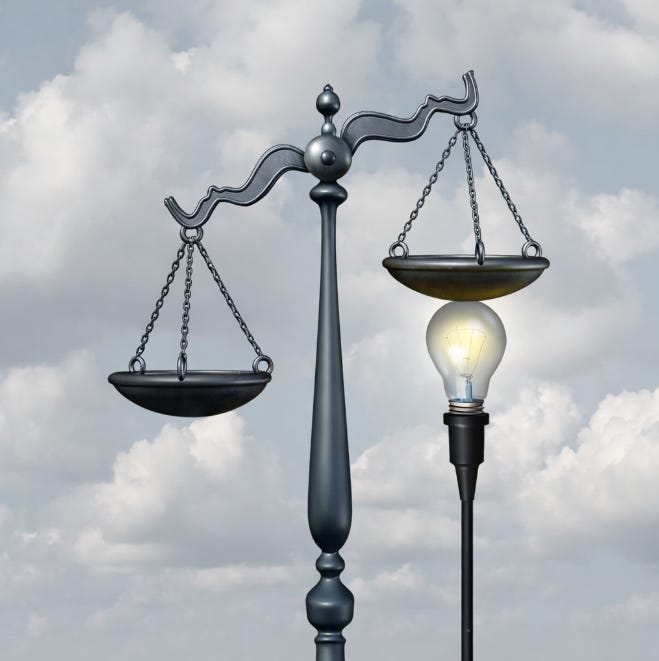
Last week, I wrote about hope and possibility for the new year. It focused on what I want more of in my personal life in 2026. I suspect many share the same wish list. Today, I decided to apply the “more” lens to science. And then take a look at the flip side (i.e., the “less” lens).
If we’re serious about building a society that can tackle climate change, pandemics, technological disruption, and countless other challenges, we need to think carefully about what’s working and what isn’t. We need to know what we need more of and what we need less of.
Science sits at the intersection of discovery, application, and learning. Yet, the relationship between scientific research, science-informed policy, and science education is fraught with challenges. For example, misinformation can spread faster than facts. Policy decisions can sometimes ignore expert consensus. Many students graduate with little understanding of basic science or how science actually works. We need to recognize and address these challenges.
By “more,” I mean the things we should invest in and reward if we want science to serve the public better; by “less,” I mean the incentives and habits that quietly erode trust, rigor, and learning. And yes, some of this feels harder than ever in the current political environment. That’s exactly why it’s worth naming what we should be building toward (and what we should stop rewarding), even when the path is steep. Here’s my “more or less” take across science, science policy, and science education.
MORE
Interdisciplinary collaboration. The most pressing problems we face don’t fit neatly into traditional academic disciplines. That’s why collaboration is essential. And while interdisciplinary work is happening (especially in climate and public health), it’s still too often underfunded, under-credited, and hard to sustain. Addressing climate change requires atmospheric scientists working with economists, sociologists, demographers, and engineers. Public health needs epidemiologists collaborating with health care providers, behavioral scientists, communication experts, and community organizers. We need more funding structures, academic incentives, and institutional frameworks that reward crossing disciplinary boundaries.
Diverse voices in science. Science is stronger when it includes perspectives from different backgrounds, cultures, and lived experiences. We need more women in STEM fields, more scientists from underrepresented racial and ethnic groups, more researchers from lower-income backgrounds, and more geographic diversity in where research happens and who conducts it. Different perspectives lead to different questions, better group think, and more innovative ideas -- all leading to better science.
Long-term funding for basic research. Not every research project has or needs immediate commercial application. Some of the most transformative discoveries—from the internet to mRNA vaccines—emerged from basic research pursued over time or out of simple curiosity. We need more sustained funding for fundamental questions, more patience for research that may not pay off for decades, and more protection for scientists pursuing knowledge for its own sake.
Open access to research. Publicly funded research should be publicly accessible. We need more open-access journals, and more institutional commitment to making research findings available to everyone who wants to read them—from fellow scientists to curious citizens.
Replication studies and publication of null results. Science advances through both confirmation and refutation, yet journals overwhelmingly favor novel, positive findings. This creates publication bias and undermines the self-correcting nature of science. We need more incentives to replicate important studies and more journals willing to publish null results.
Science communication that respects complexity. The public deserves science communication that is accessible without being dumbed down, that acknowledges uncertainty without fueling doubt, and that conveys both what we know and what we don’t. We need more scientists trained in communication, more journalists with science backgrounds, and more opportunities and platforms for nuanced discussion that resists both hype and cynicism.
Scientists in policy roles and policymakers who understand science. Evidence-based policy requires people who can bridge the gap between research and governance. We need more scientists serving as advisors, testifying before legislative bodies, and taking on leadership roles in government agencies. We need more policymakers with scientific literacy who understand how to interpret evidence and weigh uncertainty. Who actually care what the science says.
Hands-on, inquiry-based science education. Students learn science by doing and engaging with scientists not by memorizing facts. We need more lab time, more field work, more opportunities for students to meet and engage with working scientists, more opportunities ask questions and design experiments. Science education should cultivate curiosity, critical thinking, and comfort with uncertainty—not just prepare students for standardized tests.
Public understanding of how science works. Many people misunderstand the scientific process itself. They think science proves things with certainty, that scientific consensus means everyone agrees completely, or that a single study overturns established understanding. We need more education about the nature of science: how evidence accumulates, how theories develop and change, why peer review matters, and why scientific understanding evolves over time.
LESS
Politicization of scientific findings. When scientific evidence becomes a political football, everyone loses. Climate science, vaccine safety, evolution, immigration, and countless other topics have been distorted by political agendas that cherry-pick data or manufacture doubt where scientific consensus exists. Science isn’t immune to bias, but systematic evidence should inform policy debates, not be dismissed because findings are politically inconvenient.
Publish-or-perish pressure that incentivizes quantity over quality. When career advancement depends primarily on publication counts, researchers face pressure to slice findings into multiple papers, pursue trendy topics over important questions, and prioritize speed over rigor. This system produces more papers but not necessarily better science. Less emphasis on sheer productivity, more recognition of thoughtful, careful research.
Science education that kills curiosity. When science class means memorizing facts or vocabulary words for multiple-choice tests, dissecting worksheets instead of organisms, and learning science as a collection of facts rather than a way of thinking, we create students who see science subjects as boring and irrelevant. Less rote memorization, less teaching to the test, less presentation of science as settled dogma rather than ongoing inquiry and excitement.
Confusion between scientific uncertainty and complete ignorance. Scientists speak carefully about confidence levels, error bars, and limitations. Bad actors exploit this precision to suggest that if we don’t know everything, we don’t know anything. Climate deniers point to uncertainties in models to dismiss the entire field. Vaccine skeptics seize on rare side effects to claim vaccines are dangerous. We need less weaponization of uncertainty and more public understanding that uncertainty doesn’t mean ignorance. It’s a steppingstone to knowledge.
Isolation of science from society. When scientists work in ivory towers disconnected from the communities their research affects, when research priorities are set without input from the public, or when scientific findings are communicated only in technical jargon, science becomes alienated from the people it should serve. Less insularity, less assumption that expertise alone grants authority, more genuine engagement with diverse publics.
Sensationalized science journalism. Headlines that claim preliminary findings “prove” things, articles that ignore limitations and caveats, coverage that treats every new study as revolutionary—this kind of science journalism creates whiplash and erodes trust. We need less hype, less oversimplification, and less focus on individual studies divorced from broader context.
Barriers to entering science careers. Unpaid internships, years of low-paid graduate school and postdoctoral positions, geographic inflexibility, and institutional cultures that favor those with wealth and connections all make science careers inaccessible to talented people who can’t afford years of financial instability. Less dependence on crushing debt or personal wealth to embark on and sustain science careers.
Science denial masquerading as skepticism. Genuine scientific skepticism means proportioning belief to evidence and updating views when new data emerges. Science denial cherry-picks data, invents conspiracy theories, and holds fringe positions to standards of certainty it doesn’t apply to its own claims. We need less false equivalence that treats legitimate scientific consensus and fringe rejection as equally valid perspectives.
Moving Forward
The relationship between science, policy, and education determines our collective ability to understand and respond to challenges. When we do more of what strengthens these connections and less of what undermines them, we create a society better equipped to make informed decisions, solve complex problems, and cultivate the next generation of scientists and scientifically literate citizens.
Like pretty much everything else, science isn’t perfect. Scientists make mistakes, institutions have biases, and the process of discovery is messy and uncertain. But the scientific method—systematic observation, rigorous testing, peer review, and willingness to update understanding based on evidence—remains humanity’s most reliable tool for understanding the natural world.
The question is whether we’ll strengthen that tool or let it be dulled by politics, misinformation, and institutional dysfunction. The answer depends on what we choose to do more of and what we choose to do less of.
That’s my take. More or less. 😊
That’s it for today - Thank you so much for reading SciLight!
If you enjoyed today’s post, please like it or share it with others. You can also support the work we do to shine a light on the politicization of science by becoming a paid subscriber!
If you want to share today’s post as a web page with your network, click this button:
If you have suggestions, questions, comments, or want to drop us a line - send it all to scilightsubstack@gmail.com
Absolutely spot on, Kathleen. Sadly, having watched helplessly as colleagues, friends, researchers whose work I respect get muzzled, de-funded and shut down this past year, my fear is that the most urgent on your list - the blocking of funding - will not only continue but increase in the foreseeable future. And that's as we have entered what is literally an inescapable global public health crisis. Your views on ournewrealityThePlasticene would be welcome.
As a scientist, it appears to me that the US public's understanding of science is very weak. I assume this is the result of a generally poor educational system. This is a very dangerous situation given the impacts that science and technology have on the functioning of our country.