
LOOK UP!
From Screens to Streets: Sharing Responsibility for Pedestrian Safety

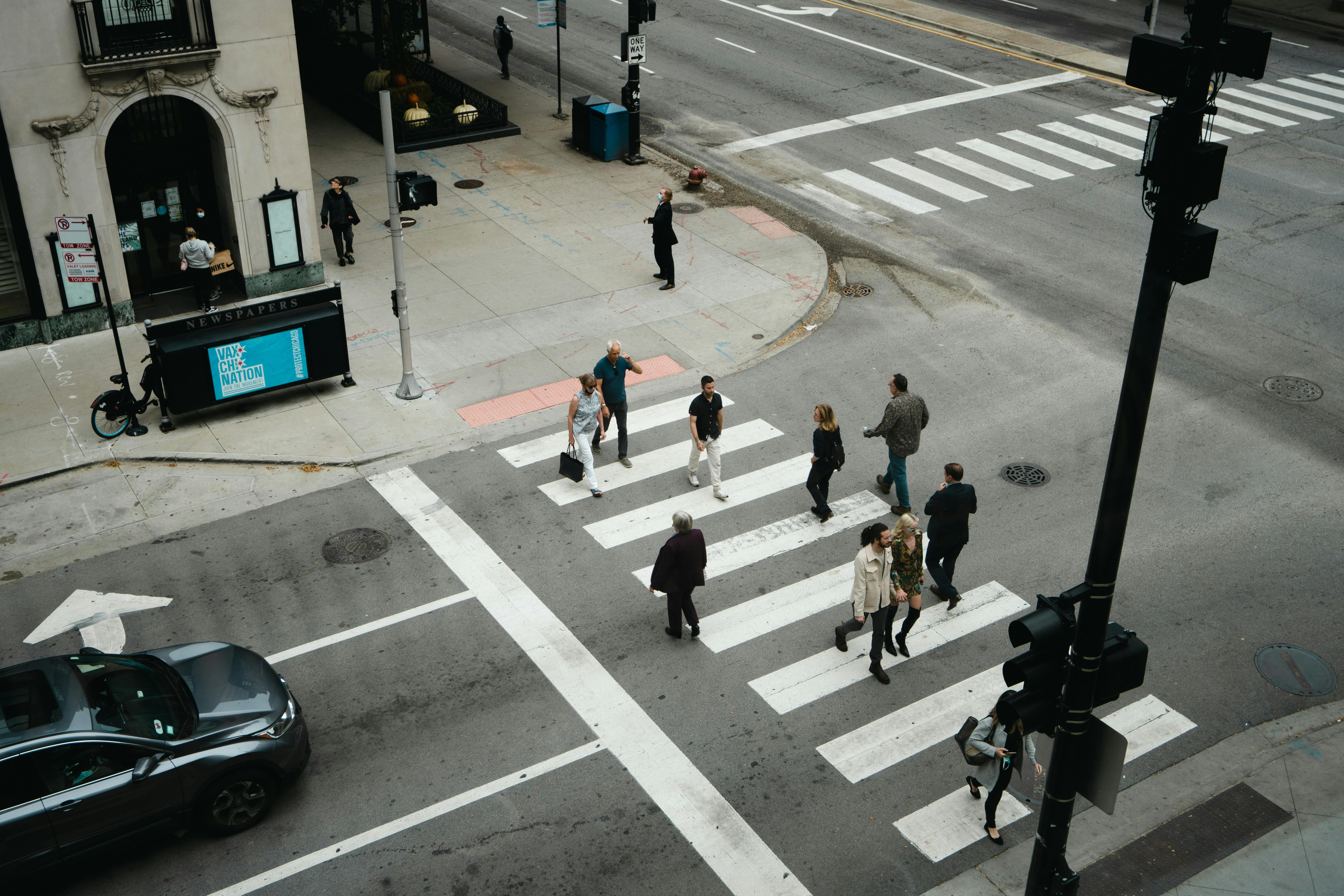
It’s a bird; it’s a plane…. No, it’s cars coming at you as you look at your cell phone while crossing a busy street against a DO NOT WALK signal. You’ve heard of distracted driving? How about distracted walking? We’ve all seen it—and we’ve likely all done it. I know I have. Crossing the street with eyes glued to a smartphone screen, texting while navigating a crowded sidewalk, or wearing earbuds so loud you can’t hear approaching traffic. In our increasingly connected world, distracted walking has emerged as a significant public safety concern that deserves our attention.
Distracted walking occurs when pedestrians divert their attention from their surroundings, typically while using smartphones or other electronic devices. Using them to text, talk, listen to music, check social media, look at photos, or even watch videos! When our attention diverted in this way, our ability to perceive and react to potential hazards becomes severely compromised.
It’s a Problem
According to the National Safety Council, an estimated 9,076 pedestrians died in traffic and non-traffic incidents in 2023, with 7,314 of those killed in traffic crashes on public roads.
Most serious pedestrian injuries and fatalities are the result of several factors:
· Driver Inattention and Behavior: Distracted driving (e.g., cell phone use) significantly increases the risk of accidents by reducing driver reaction time. Failure to yield the right-of-way is also an issue.
· Car Speed: Speed is a critical determinant of both the likelihood of a crash and the severity of injuries. A pedestrian has a 90% chance of survival if struck at 20 mph, but less than a 50% chance if hit at 30 mph, and an 85% chance of being killed at 40 mph .
· Road Design: Roads designed primarily for high-speed vehicle movement, such as multi-lane urban arterials with few crosswalks and inadequate lighting, create dangerous environments for pedestrians. A lack of sidewalks, insufficient crossing time, and large vehicles like SUVs further increase the risk of severe outcomes.
But research suggests that mobile device use plays an increasingly significant role in pedestrian safety incidents. See here, here, here, here, here.
Dr. Wayne Giang, a researcher at the University of Florida, examined the connection between “phone-related distracted walking” and emergency department visits. Using government data spanning the years 2011 to 2019, he and his colleagues turned up nearly 30,000 walking injuries occasioned by phones. While many of those accidents occurred on streets and sidewalks, almost a quarter happened at home. Tripping over something or falling down the stairs is a real risk, Dr. Giang said.
When we use our smartphones while walking, we’re engaging in a “dual-task” activity, which requires our brains to simultaneously process information from our devices while navigating our physical environment. This cognitive load significantly impacts our ability to walk safely. It also reduces our situational awareness, which can lead to accidents like tripping, bumping into others, and not seeing vehicles, traffic lights, or other obstacles in our paths. Texting appears to be particularly dangerous because it demands visual, cognitive, and manual attention simultaneously.
Some Personal Safety Tips
Protecting yourself from distracted walking injuries doesn’t require giving up your smartphone—just using it more mindfully. For example, you can:
· Stop and Stand Aside: If you need to use your phone while walking, find a safe place to stop. Complete your call, text, or task before resuming your walk. This simple habit eliminates the dual-task problem entirely.
· Look Up: If you must glance at your phone while walking, hold it higher in your visual field rather than looking down. This helps maintain some peripheral awareness of your surroundings.
· Plan Ahead If You’re Going to Use Your Phone While Walking: Before you start walking, queue up your music, podcast, or navigation app. This reduces the need to interact with your device while moving.
· Lower the Volume: If you’re listening to music or podcasts, keep the volume low enough to hear ambient sounds, including traffic, sirens, and other warning signals.
· Use Voice Features: Take advantage of voice-to-text and hands-free calling features. These technologies allow you to keep your eyes up and hands free.
· Obey Traffic Laws: Always cross at designated crosswalks and obey all traffic signals. Never assume drivers see you—make eye contact with drivers before crossing.
· Stay Especially Alert Near Roads: Save important calls and texts for when you’re away from traffic. The few minutes it takes to reach a safe location could save your life.
· Be Mindful at Home: Remember that many if not most distracted walking injuries happen at home. Stay aware even in familiar environments, especially near stairs or in areas with clutter or no/low lighting.
But It’s Not All On You….
Let’s not over-state the role of distracted walking in pedestrian injuries and fatalities. Vehicle speed, driver behavior, and infrastructure design are the primary contributors to outdoor pedestrian deaths and serious injuries. The most effective safety improvements come from systemic changes like reducing speed limits, improving crosswalk design, and ensuring drivers remain attentive.
Other policy and technology solutions include:
· Lowering and enforcing speed limits.
· Improving lighting and signaling at pedestrian crossings.
· Filling potholes, so drivers don’t have to swerve to avoid them.
· Creating dedicated lanes for pedestrians using mobile devices to separate them from other walkers.
· Encouraging the use of apps that limit phone use while walking or provide reminders to stay alert.
· Conducting educational and outreach campaigns to inform people about the risks of distracted walking.
· Incorporating pedestrian safety education for all ages, particularly for children, into school and community programs.
· Encouraging the use of apps that limit phone use while walking or provide reminders to stay alert.
· Promoting the use of voice-to-text messaging features so users can keep their hands free and their eyes on their surroundings.
· Developing and integrating smart technology that can detect distracted walking behavior and alert the user to potential hazards.
Bottom Line
The prevalence of smartphones in our daily lives isn’t going away, nor should it. These devices provide tremendous value in communication, navigation, and entertainment. The key is learning to use them responsibly, especially when we’re vulnerable as pedestrians.
According to the World Health Organization, around 270,000 pedestrians are killed on the roads each year, accounting for around a fifth of all road traffic deaths. While distracted walking is just one contributing factor to pedestrian death and injury, it is one over which we have some control and ability to address through our individual choices.
So, the next time you’re tempted to read an email, send a text while crossing the street, or check that notification while walking down a busy sidewalk, remember: It can surely wait a few minutes. Your safety—and the safety of those around you—is worth far more than any message on your screen. Trust me….
So stay alert, stay safe, and look up!
That’s it for today - Thank you so much for reading SciLight!
If you enjoyed today’s post, please like it or share it with others. You can also support the work we do to shine a light on the politicization of science by becoming a paid subscriber!
If you want to share today’s post as a web page with your network, click this button:
If you have suggestions, questions, comments, or want to drop us a line - send it all to scilightsubstack@gmail.com
This article feels a bit victim blaming towards vulnerable road users. Smart phones exists everywhere yet it's the US among developed countries where this is a public health and safety issue.
An important but often overlooked health & safety issue. Rates of US pedestrian deaths have been rising by almost 4% per year since 2009 and vary dramatically by state and city.