
Exit Interview
One Year Since I Lost My NOAA Job


The email arrived at 3:30 p.m., written in the antiseptic language institutions favor when they wish to avoid drama. I was informed that my position was being eliminated because I was a probationary employee. Hundreds of others received the same message at the same time. Some packed boxes. Some, like me, wept at their desk with the doors closed. I stared at my badge, still warm from my pocket, and wondered if this was the moment a career becomes past tense. This couldn’t be real. I didn’t do anything to deserve it. People only got fired if they didn’t do a good job, right?
It was February 27. I had been back at the National Oceanic and Atmospheric Administration for just 18 months, leading external affairs after returning to federal service. It was, technically, a probationary period—for me, a two-year window meant to assess suitability, though I had previously spent 5 years at NOAA with a decade in between. In that time, I had two performance reviews, both glowing reports. I enjoyed the work—it was challenging and meaningful—and I took the day-one oath we swore to uphold seriously.
Federal service is not lucrative. It is a decision shaped more by temperament than ambition. You accept constraints—ethics rules, salary ceilings, layers of review—in exchange for continuity and purpose. Even being hired by the federal government is a feat in its own right. It’s months of interviews and clearances. In my role, I worked to communicate with the private sector, academia, and nonprofits about the science of oceans and climate: hurricane forecasts, fisheries data, Arctic monitoring, the quiet but consequential work that underpins shipping lanes, insurance markets, and coastal planning. The work is rarely dramatic. It is incremental, precise, and dependent on trust and relationships.
A Calling
When I returned to NOAA, it felt less like a career move than a reaffirmation. The climate was warming. Hurricanes were intensifying. The ocean was absorbing heat at rates that even seasoned scientists found startling. I believed that the country needed strong public institutions capable of translating these realities into action, and NOAA is one of the best examples of turning science into action that saves lives and livelihoods. I was thrilled to be part of the work.
Probationary status has a bureaucratic neutrality to it. On paper, it is a safeguard. In practice, it renders even seasoned professionals vulnerable. My previous years of service did not shield me from that vulnerability. When the email arrived, there was no long deliberation, no public reckoning—just a brief notification and the abrupt collapse of a role I had only recently rebuilt—a position that had been wiped out the last time Trump was in office.
The badge stopped working before my indignation did. Being dismissed is humiliating in ways that are difficult to articulate. There is the immediate calculus—mortgage payments, health insurance, credit card bills, school loans—but there is also the more abstract unraveling of identity. It felt like grief. What happened to us was so abrupt and so unjust that it felt as though life as I knew it, worked for, and excelled at was simply gone.
Adding Injury to Insult
What deepened the injury was timing. Even as I packed up files and forwarded emails in the brief time I had to wrap up that day, environmental regulations were being reconsidered, advisory bodies undone or reshaped, and budget lines questioned. Language that had once been standard—“climate resilience,” “adaptation,” “risk mitigation”—became contested. Even words like “female” and “inclusion” were marked for silence. I watched, from the outside, as frameworks I had helped defend grew less certain.
It is one thing to lose a job. It is another thing to watch the work itself declared negotiable. Are we really still debating whether climate change is real? Are we really rolling back laws that protect the air we breathe and the water we drink? Is greed really going to lead us to a slide back to a dark time when rivers were on fire? What good is money when you’re dead?
Environmental policy is often debated in abstractions, but its effects are granular. At NOAA, it determines whether a port authority has updated storm-surge projections, whether a fishing community has accurate stock assessments, and whether a coastal city can model hurricane impacts and sea-level rise with confidence. These are not ideological exercises. They are technical safeguards in a warming world. This is part of the infrastructure of our lives.
NOAA Lost an Estimated 27,000 Years of Experience in a Blink
In the months after my dismissal, I experienced a double loss: the loss of professional footing and the loss of faith that institutions would move steadily, if imperfectly, toward precaution. There is a term for this—moral injury—the distress that arises when one feels prevented from doing work aligned with deeply held values. I had returned to NOAA believing that communication could fortify public trust in science. Instead, I found myself sidelined while the political winds shifted.
Despair, however, is impractical. Driven in part by determination and anger, and in part by panic, I sat down at my desk at home and registered a small communications consulting firm. I began advising organizations still fighting to protect ocean data and environmental safeguards. I applied for full-time roles and, more than once, came in second place. After particularly bruising rejections, I allowed myself a moment to take a breath. The next morning, I set the alarm and began again. I did not become braver. I simply ran out of alternatives.
Distance has clarified certain truths. Federal agencies feel monolithic from the outside, but they are sustained by individuals—scientists who board vessels at dawn, analysts who calibrate satellite feeds, career staff who have served through multiple administrations. Political cycles are loud. Institutional memory is quieter and more fragile than we admit. In the months following my firing, more than 2,000 additional employees left NOAA through retirement and early departures. By one estimate, the agency lost some 27,000 cumulative years of experience in a single season.
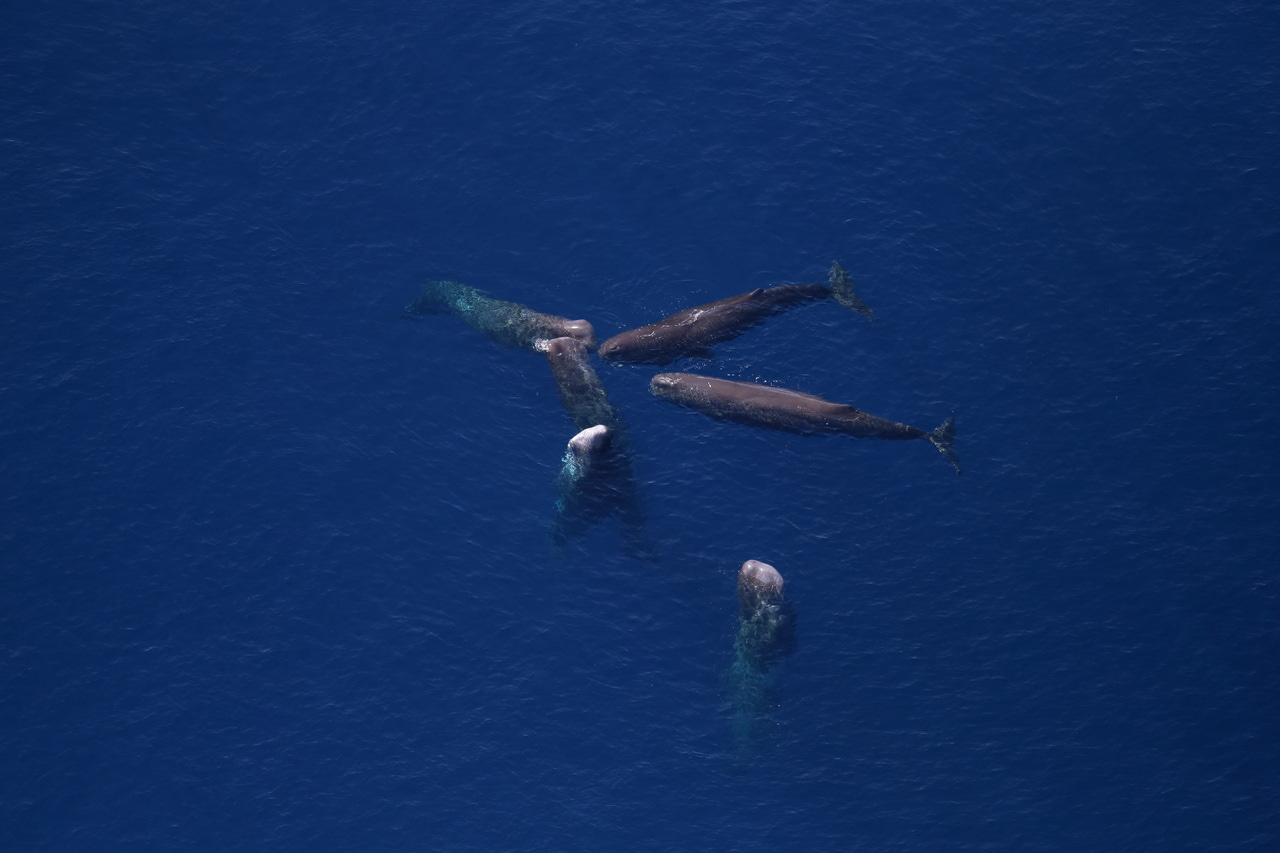
In his writing on animal societies, Carl Safina describes what happens when a pod of sperm whales loses its matriarch, or when a wolf pack is stripped of its elders. The loss is not only numerical. It is instructional. The most experienced animals carry knowledge of migration routes, hunting strategies, seasonal dangers—information not encoded in instinct but learned, remembered, and passed down. When they vanish, the group does not immediately collapse. It continues moving, feeding, and surviving, but life is altered. Something essential has been thinned: the memory of where to go when conditions shift.
Institutions, for all their bureaucracy, are not so different. The spreadsheets remain. The satellites orbit. But the quiet wisdom—why a buoy was placed in a particular channel, which coastal mayor to call before a storm makes landfall, how to interpret an anomaly because you saw its precursor 20 years ago—resides in people. When they leave en masse, the structure stands, but the inheritance falters.
The World Keeps Spinning
The ocean continues to warm regardless of rhetoric. Buoys transmit data. Satellites circle. Coastal families look at flood maps and ask practical questions: How high? How soon? What now? The demand for reliable science persists, even when policy wavers.
Hope, I have learned, is not optimism. It is persistence. I no longer carry a NOAA badge. My probationary period ended just four months before it was due to conclude. But public service, at its core, is not confined to a payroll line. It is a posture—a decision to align one’s work with the long-term well-being of communities and ecosystems.
Environmental protections can be weakened on paper. They are harder to extinguish in the minds of those who understand why they exist. Institutions falter. Regulations ebb and flow. The tide recedes. The coastline shifts, reshapes, but somehow it remains.
Losing my job did not extinguish my commitment; it clarified it. In darker times, the light that guides is not triumph but endurance—the quiet insistence that the work still matters, even when the badge no longer opens the door.
That’s it for today - Thank you so much for reading SciLight!
If you enjoyed today’s post, please like it or share it with others. You can also support the work we do to shine a light on the politicization of science by becoming a paid subscriber!
If you want to share today’s post as a web page with your network, click this button:
If you have suggestions, questions, comments, or want to drop us a line - send it all to scilightsubstack@gmail.com