

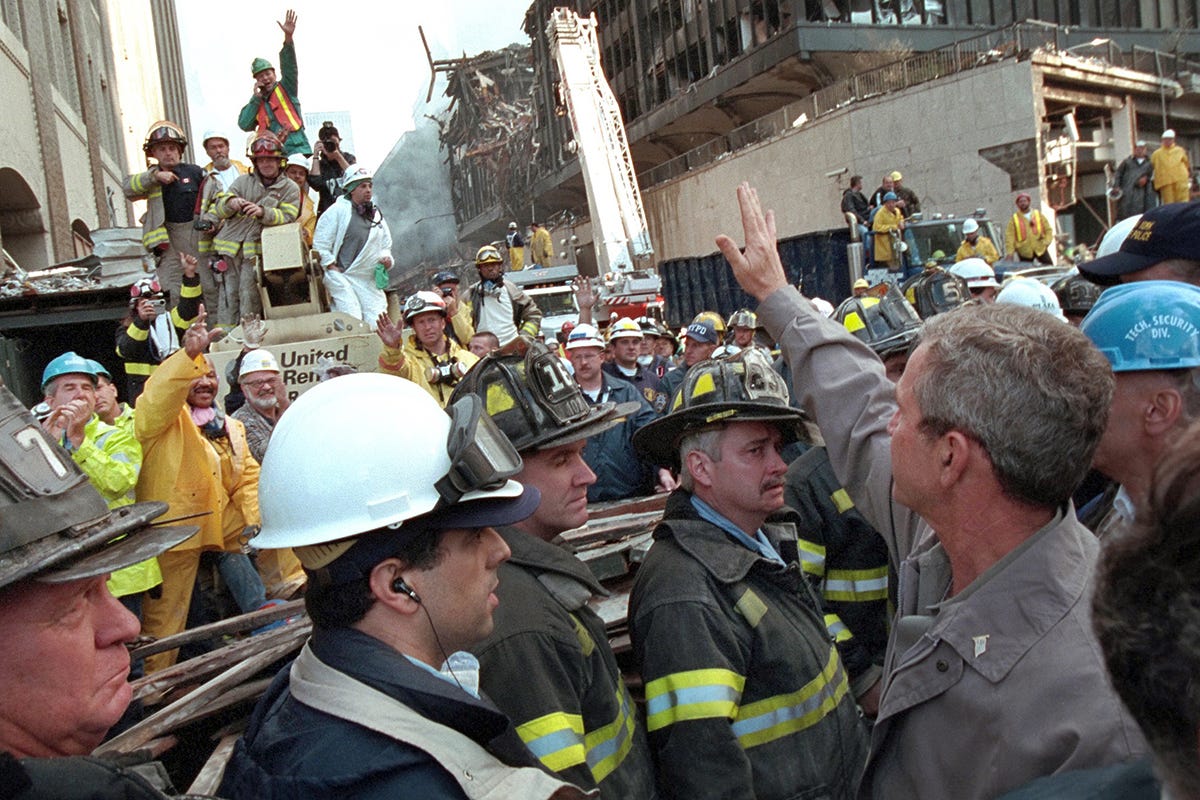
On September 11, 2026, the United States marks twenty-five years since nineteen terrorists hijacked four commercial aircraft, killing nearly 3,000 people in New York City, at the Pentagon, and in a field near Shanksville, Pennsylvania. A quarter century is long enough that roughly 100 million Americans alive today were either not yet born or too young to form their own memory of that morning, according to the 9/11 Memorial & Museum. That demographic reality is reshaping how the nation marks this anniversary: not only as a day of mourning, but as a test of whether the public health and compensation systems built in the attacks’ aftermath, and the historical memory surrounding them, can be sustained for a generation with no lived experience of the day itself.
A Scientific and Policy Achievement Two Decades in the Making
The public health response to 9/11 is one of the largest and longest-running disaster-medicine efforts in American history, and the peer-reviewed evidence documenting it is substantial. The World Trade Center Health Registry, established by the New York City Department of Health and Mental Hygiene, and complementary cohorts maintained by the Fire Department of New York and the Icahn School of Medicine at Mount Sinai’s General Responder Cohort, have together produced hundreds of published studies tracking responders, recovery workers, and survivors.
A synthesis published in the International Journal of Environmental Research and Public Health found that by 2020 nearly 950 WTC-related articles had been published, documenting elevated rates of obstructive airway disease, upper respiratory illness, gastroesophageal reflux, PTSD, and multiple cancers among those exposed to the dust cloud and its aftermath. Longitudinal follow-up published in the Journal of the National Cancer Institute and in CA: A Cancer Journal for Clinicians has confirmed increased incidence of specific cancers, including thyroid cancer, melanoma, and tonsil cancer, among rescue and recovery workers followed for more than a decade.
A 2026 analysis in the American Journal of Industrial Medicine went further, finding that enrollment in the World Trade Center Health Program itself was associated with reduced cancer- and heart-related mortality relative to comparable unenrolled populations, evidence that sustained medical monitoring and treatment access measurably extends lives.
That evidence base translated directly into durable policy. The James Zadroga 9/11 Health and Compensation Act of 2010 created the modern WTC Health Program, and its 2015 reauthorization extended the program’s authorization through 2090, essentially guaranteeing no-cost medical monitoring and treatment for certified WTC-related conditions for the rest of enrollees’ lives. The program now serves more than 125,000 members. In February 2026, Congress passed legislation fully funding the WTC Health Program going into its 25th-anniversary year, a bipartisan action that senators framed as making good on the “never forget” commitment at a moment when new diagnoses, especially cancers, are still climbing rather than tapering off.
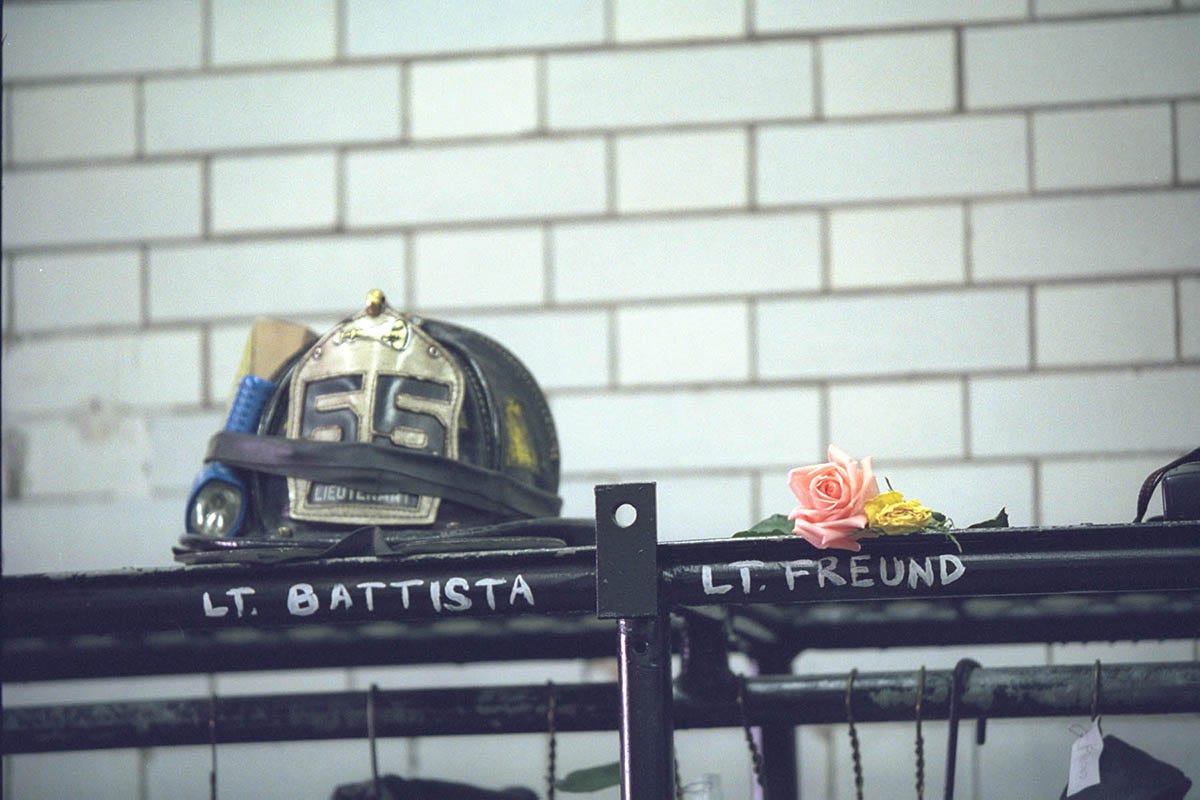
The September 11th Victim Compensation Fund tells a parallel story. Originally created in 2001 with a capped appropriation, the VCF was reopened permanently in 2011 and then, through the 2019 “Never Forget the Heroes” Act, given open-ended funding and a claims deadline extended to 2090, removing the recurring uncertainty that had forced sick responders to lobby Congress repeatedly for extensions. According to the Department of Justice, as of late August 2026 the VCF has received more than 112,000 claims and awarded over $18.5 billion to more than 77,000 claimants since reopening, with nearly $1.8 billion distributed in 2025 alone. VCF officials have noted that the composition of claimants has shifted over time, from mostly uniformed first responders in the fund’s early years to a growing share of civilian survivors: office workers, residents, and students who lived, worked, or attended school near Ground Zero.
Why the Next Generation Needs to Understand This
These achievements matter for more than the people they directly serve. They demonstrate, with two decades of data behind them, what a sustained scientific and legislative commitment to a disaster-affected population can accomplish, and what happens when it lapses: the years in which VCF funding was capped and temporary produced real anxiety and hardship for claimants who were sick and uncertain whether compensation would materialize. That history is a case study in disaster epidemiology and health policy that has relevance well beyond 9/11, informing how the country might respond to future mass-casualty or environmental-exposure events.
It is also, increasingly, a history that must be actively taught rather than simply remembered. The 9/11 Memorial & Museum has built new exhibitions and digital learning experiences for the 25th anniversary specifically because so many students have no personal memory of the attacks, and New Your City has committed new funding toward bringing eighth graders to the museum. Educators quoted in coverage of the anniversary have described 9/11 as material that now must be taught the way earlier generations taught Pearl Harbor or the Kennedy assassination, as history rather than memory. Surveys of college students born after 2001 suggest many feel a genuine distance from the day’s emotional weight even as they affirm that it should keep being taught.
For an epidemiologist or public health professional, the throughline is clear: the health outcomes documented in the WTC Health Registry and the compensation delivered through the VCF are not closed chapters. New cancer diagnoses and respiratory conditions continue to emerge among people exposed twenty-five years ago, meaning the surveillance and treatment infrastructure built after 9/11 must remain scientifically active and adequately funded indefinitely. Passing that understanding to a generation with no memory of the day is not sentimental work; it is how a democracy sustains the political will to keep funding a program that will still be caring for patients in 2090. Honoring the past and protecting the future, in this case, are the same task.
That’s it for today - Thank you so much for reading SciLight!
If you enjoyed today’s post, please like it or share it with others. You can also support the work to shine a light on the politicization of science by becoming a paid subscriber!
If you want to share today’s post as a web page with your network, click this button:
If you have suggestions, questions, comments, or want to drop us a line, send it all to scilightsubstack@gmail.com
